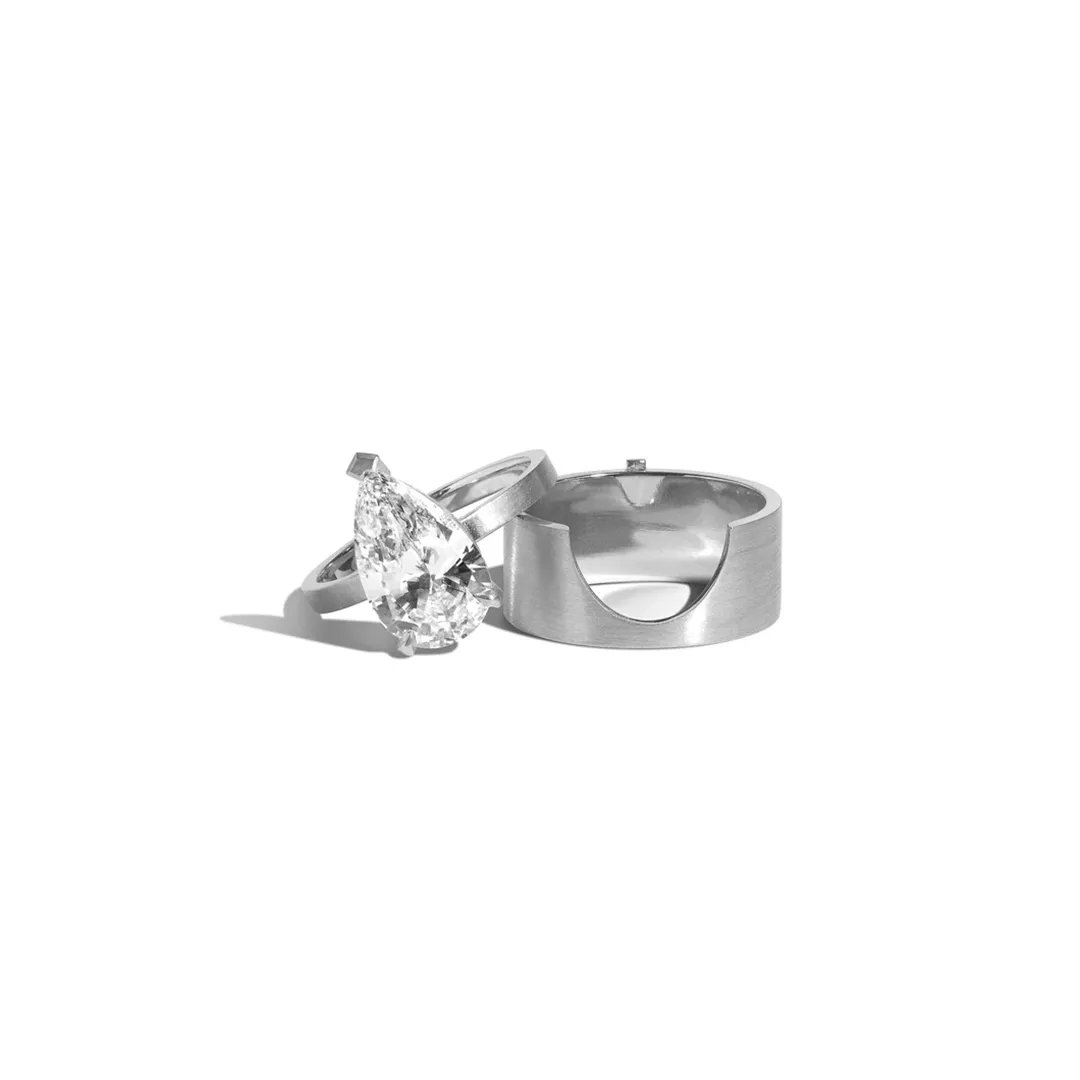
Profession matters · 2026 guide
Engagement rings
for architects.
She balances functionality and beauty professionally — and she brings that same lens to a ring. An architect looking at an engagement ring isn’t just seeing sparkle. She’s reading proportions, evaluating material choices, assessing whether the setting logic holds up.
See the collection ↓
Why profession matters
The most resolved ring
wins. Every time.
A prong arrangement that’s slightly off-centre will bother her in a way it wouldn’t bother most people. A band that’s too thick relative to the stone will feel unresolved. A setting that prioritises visual impact over structural integrity will read as a design failure, not a feature.
Her style is sleek, modern, and thoughtfully designed. She’s drawn to clean lines, geometric influence, and architectural details — a minimalist band with a precisely placed stone, a structured bezel, an emerald cut that echoes the right angles she draws every day.
For her, the right ring isn’t the most impressive one. It’s the most resolved.
Every ring in this collection is personally chosen with that standard in mind — a miniature work of considered design, not just a pretty object.
What to look for
Four things that matter
for architectural taste.
01
Stone cuts that speak her language
Emerald cuts are the most architecturally resonant diamond shape — their rectangular form, step-cut facets, and clean right angles echo the spatial logic an architect works with every day. They reward close attention in the same way good architecture does: the more you look, the more you see. Asscher cuts offer the same step-cut quality in a square form — more geometric, slightly more compact. Both cuts prioritise clarity and precision over brilliance — which suits someone who values structural honesty over surface effect.
The architect’s first choice
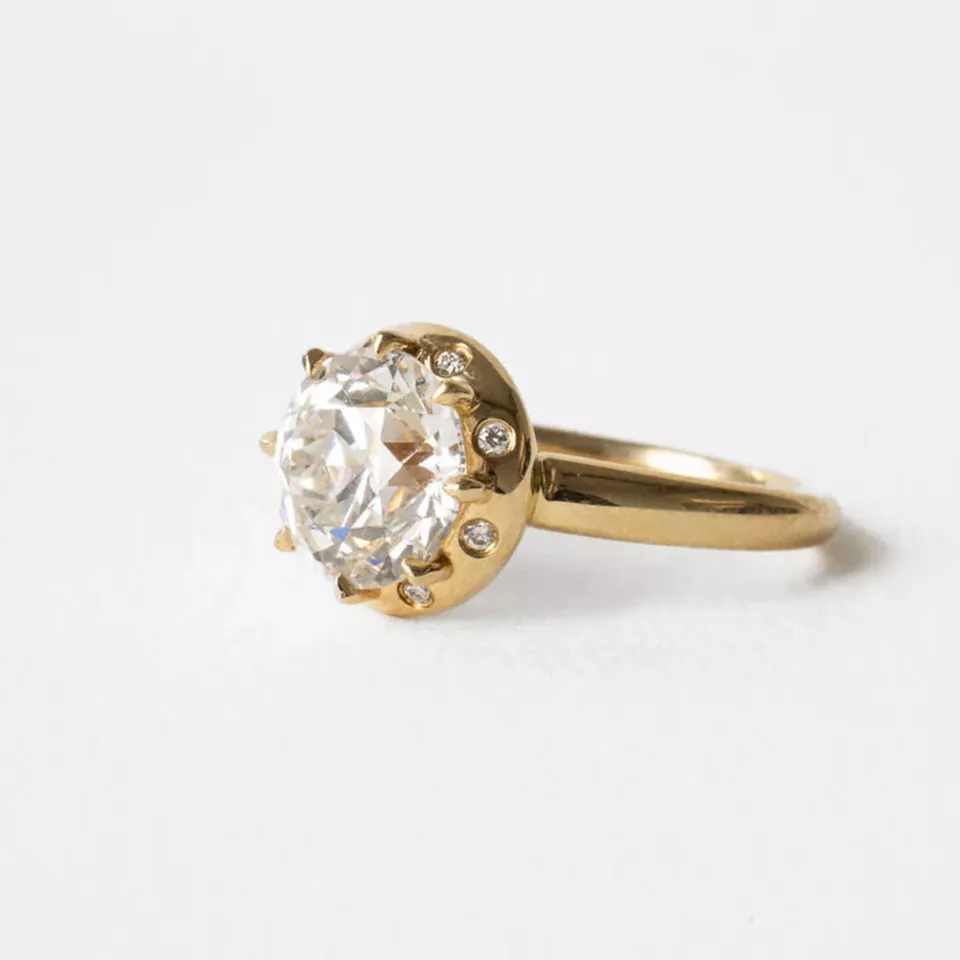
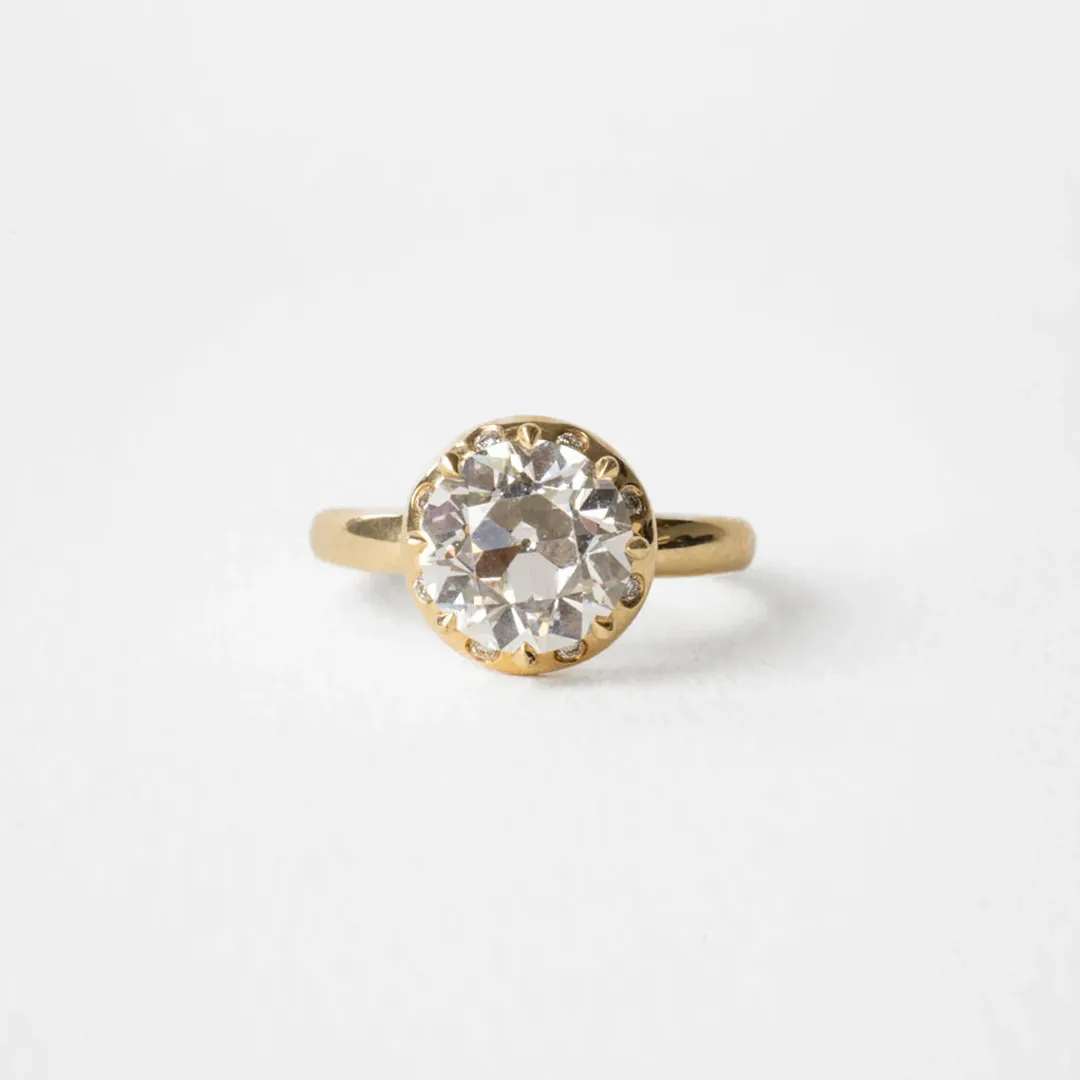
A well-proportioned emerald cut in a slim platinum bezel — one of the most architecturally satisfying rings available, and one of the most distinctive choices across any profession.
02
Setting as structural decision
An architect will read a ring setting the way she reads a building detail — as a structural and aesthetic decision that either makes sense or doesn’t. A bezel setting is architecturally the most honest: the metal holds the stone through continuous contact, the geometry is clean, and there are no decorative elements that don’t also serve a functional purpose. A tension setting — where the stone appears to float — appeals to many architects for its structural audacity, though it’s worth noting that tension settings are more difficult to resize and repair.
03
Site visits and drawing table reality
Architects move between desk work and site visits in ways that create specific ring demands. Drawing and modelling at a desk has the same requirements as any office profession: settings under 5mm, slim bands, nothing that presses into adjacent fingers during extended work. Site visits add physical demands — hard hats, safety gloves, rough surfaces. Many architects choose a ring that handles the desk comfortably and remove it for active site work. A slim, low-profile setting makes that on-and-off routine effortless.
04
Material honesty — the architect’s metal choice
Architects have strong opinions about material honesty — the principle that materials should look and behave like what they actually are. Platinum is the most materially honest white metal — naturally white, no rhodium plating required, develops a natural patina over time rather than degrading. White gold, by contrast, requires replating every one to two years. For someone who thinks carefully about material integrity, that distinction tends to matter. Yellow gold in 14k or 18k is the other honest choice — increasingly popular in design and architecture circles.
Common questions
FAQ — what people
actually ask.
What type of engagement ring suits architects best?
An emerald or Asscher cut in a clean bezel or slim four-prong setting is the most consistently resonant choice. Both cuts echo the geometric logic and structural precision that define architectural thinking — step-cut facets, clean rectangular or square forms, and a visual quality that rewards attention rather than demanding it. Proportions matter enormously: the relationship between stone size, band width, and setting height needs to feel resolved rather than arbitrary.
Can a ring reflect an architect’s creativity?
More than almost any other profession, yes — because an architect reads design in everything, including the objects she wears. A ring with considered proportions, honest materials, and a setting logic that makes structural sense will resonate with her in ways that a merely decorative ring won’t. The details matter: the exact width of the band relative to the stone, the height of the setting, the finish on the metal. These aren’t overthinking — they’re the same observations she makes about every built object she encounters.
Can a ring survive blueprints, coffee, and site visits?
The right one absolutely can. For desk and drawing work, a slim low-profile setting under 5mm handles extended work sessions without discomfort. For site visits, many architects remove the ring and keep it safe during active construction environments — a low-profile bezel or solitaire comes off and on easily. The ring that genuinely earns architect approval is one where every specification was a considered decision — material, proportion, setting logic — and the result feels inevitable rather than chosen.
Should an architect choose a subtle or statement ring?
Understated with structural interest almost always wins. The best rings for architects aren’t quiet because they’re modest — they’re quiet because everything is in the right place and nothing needs to shout. An emerald cut in a slim bezel, an Asscher in a precise four-prong — these are rings that don’t demand attention but reward it completely when given. That’s the same quality the best architecture has. You walk past it and something feels right. You stop and look closer and realise how much thought went into it.