Profession matters · 2026 guide
Engagement rings
for therapists.
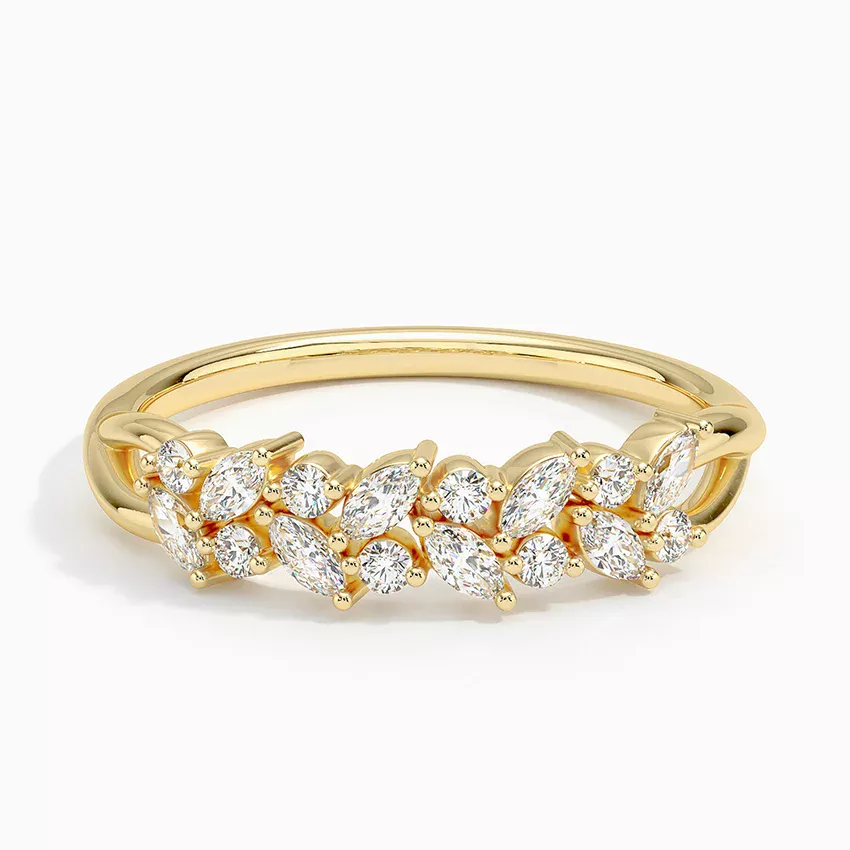
She listens with empathy, brings calm to chaos, and helps others find clarity. Her ring is noticed in the therapy room — not consciously, not always, but it forms part of the picture clients build of the person they’re trusting with their most vulnerable moments.
See the collection ↓
Why profession matters
The right ring for
the therapy room.
A therapist sits across from a client for fifty minutes at a time, often at close range, in a quiet room where both people are paying careful attention. Everything in that room is registered. Her ring is noticed — not consciously, not always, but it forms part of the picture clients build of the person they’re trusting with their most vulnerable moments.
That’s not a reason to choose a small ring. It’s a reason to choose the right one. A ring that sparkles dramatically under office lighting or has an elaborate setting that draws the eye can subtly shift client attention at exactly the wrong moment.
She understands that better than anyone — the whole job is about removing distractions so the other person can be heard.
Her style is simple, elegant, and deeply meaningful. The right ring reflects trust, connection, and lasting commitment — calm, balanced, and completely her own.
What to look for
Four things that matter
for therapeutic work.
01
The therapy room — what clients unconsciously notice
Therapists are trained to understand that the therapeutic environment communicates meaning before a word is spoken. A very large or elaborate ring can signal wealth or status in ways that create subtle distance with certain clients — particularly those working through issues around money, relationships, or self-worth. A ring that’s clearly beautiful but understated avoids this entirely. The goal is a ring that reads as warm, grounded, and personal rather than impressive or status-signalling.
The therapist’s sweet spot
A ring that’s noticed when people look, and forgotten when they’re talking — which is precisely the quality a good therapist cultivates in everything about their presence.
02
Session comfort — fifty minutes, back to back
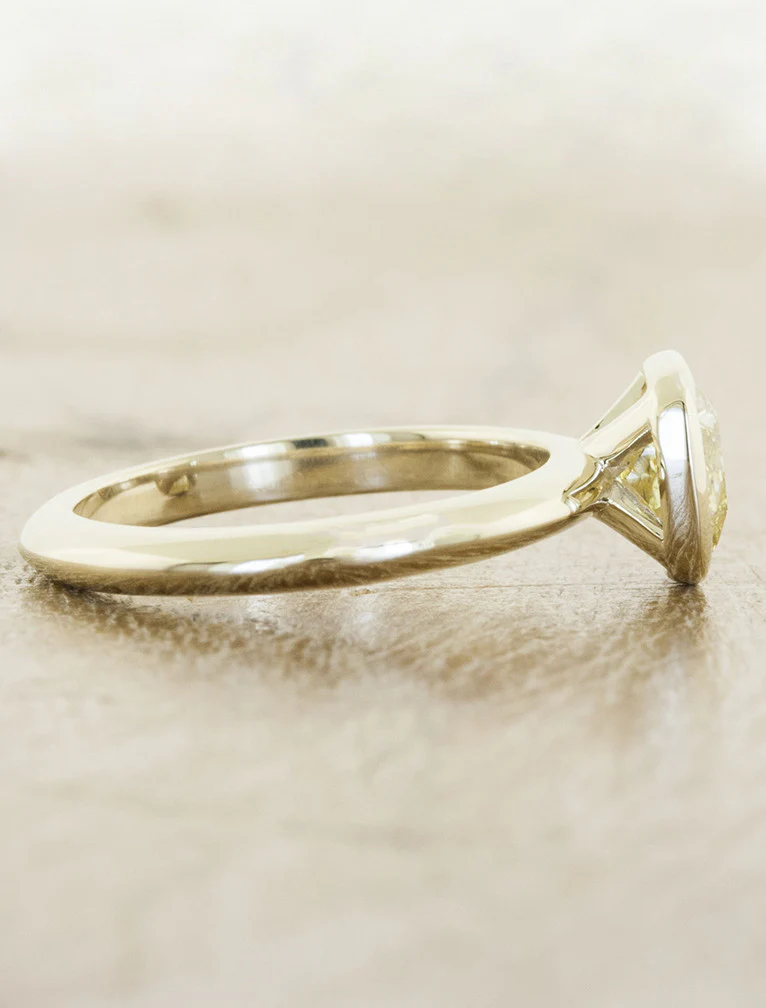
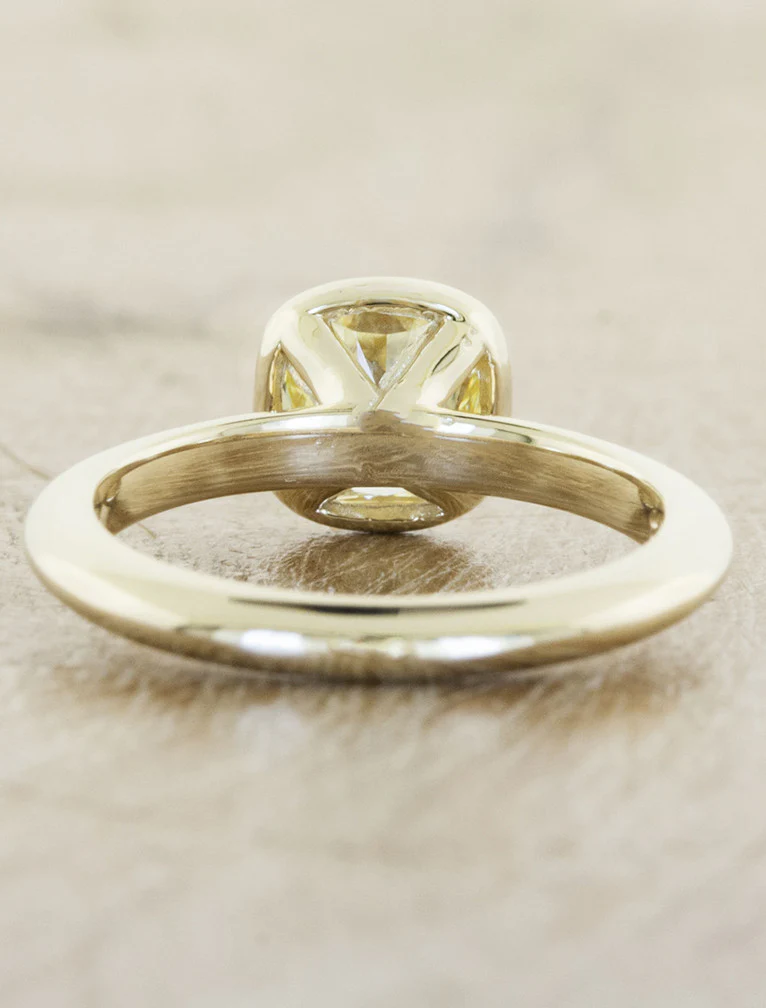
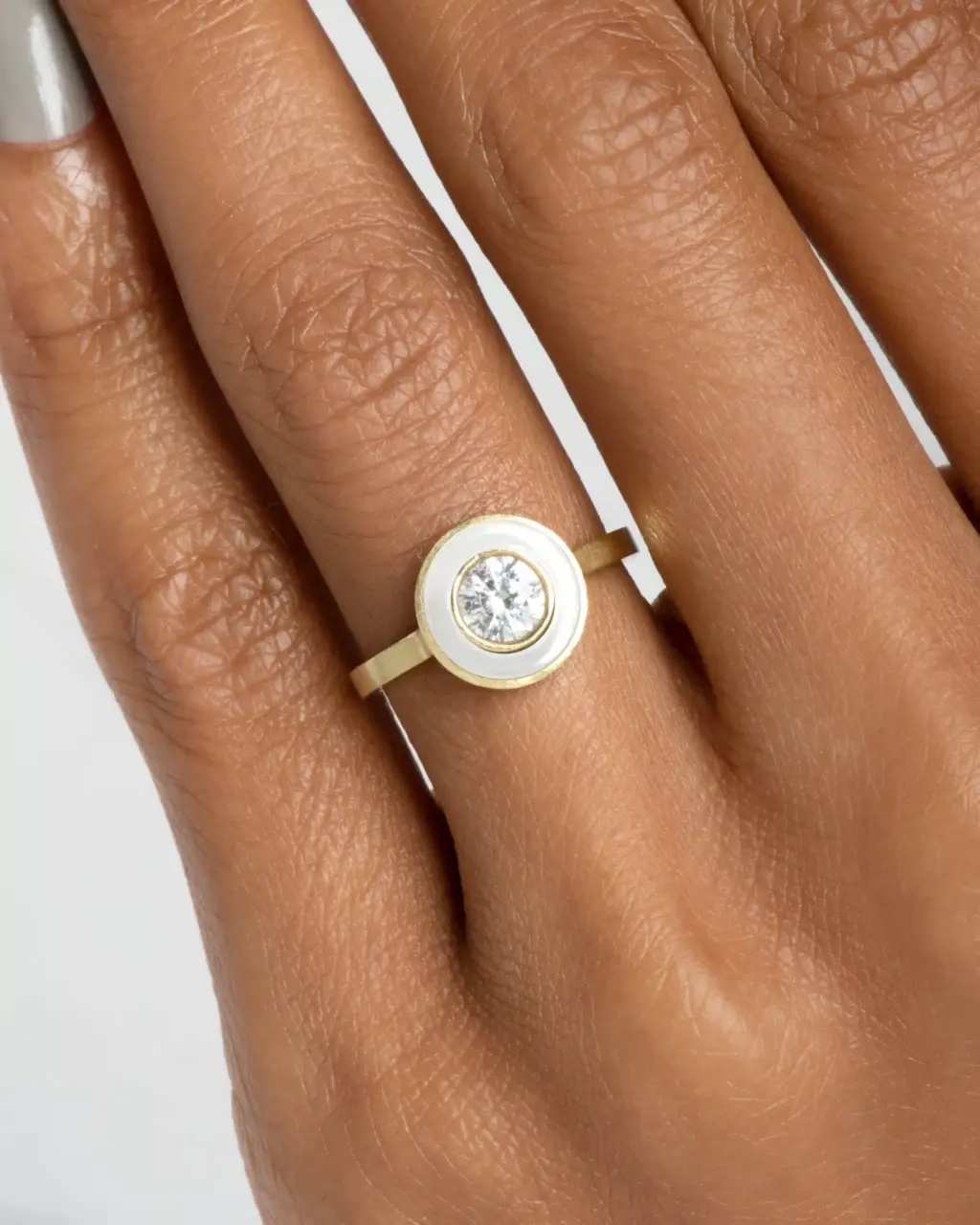
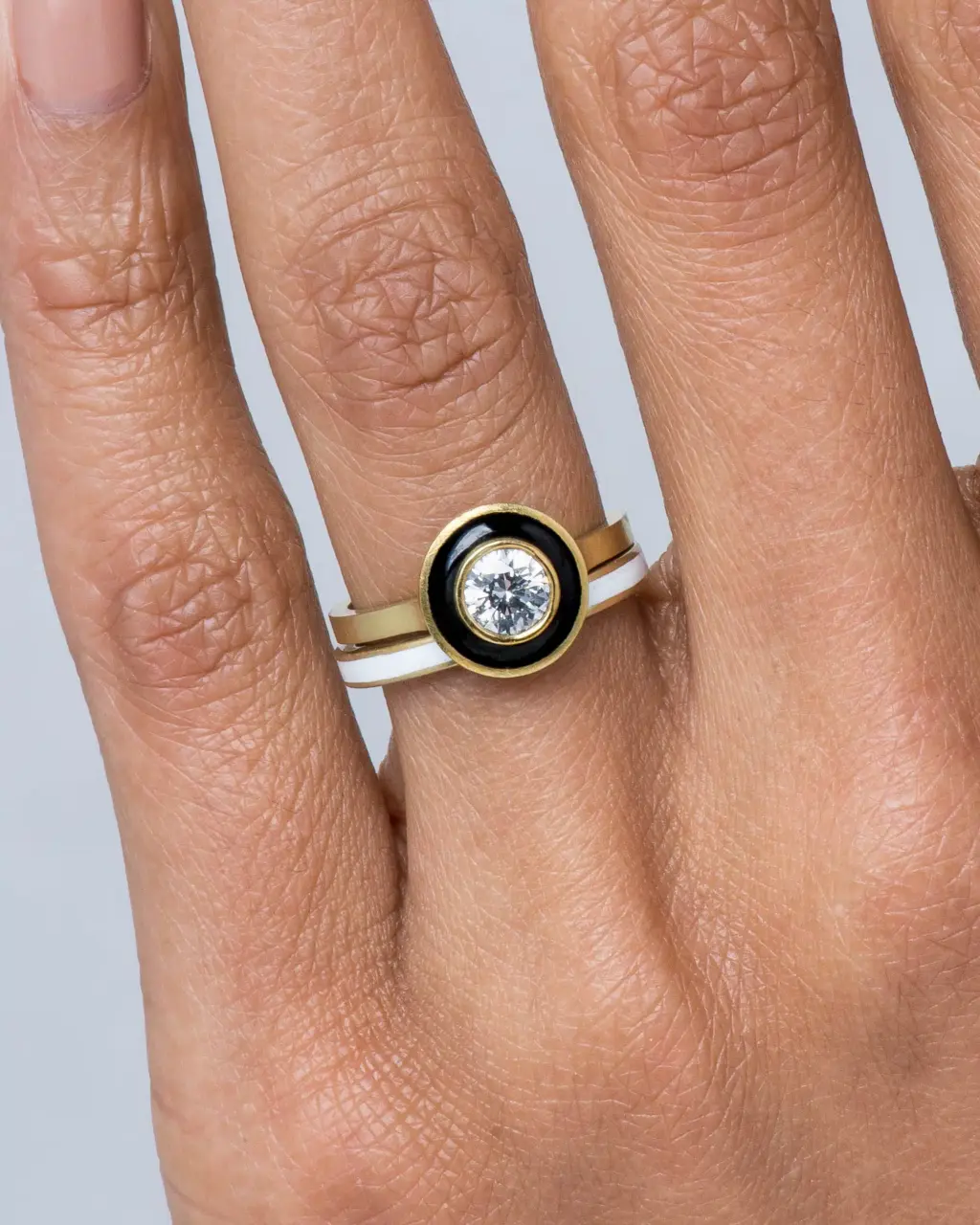
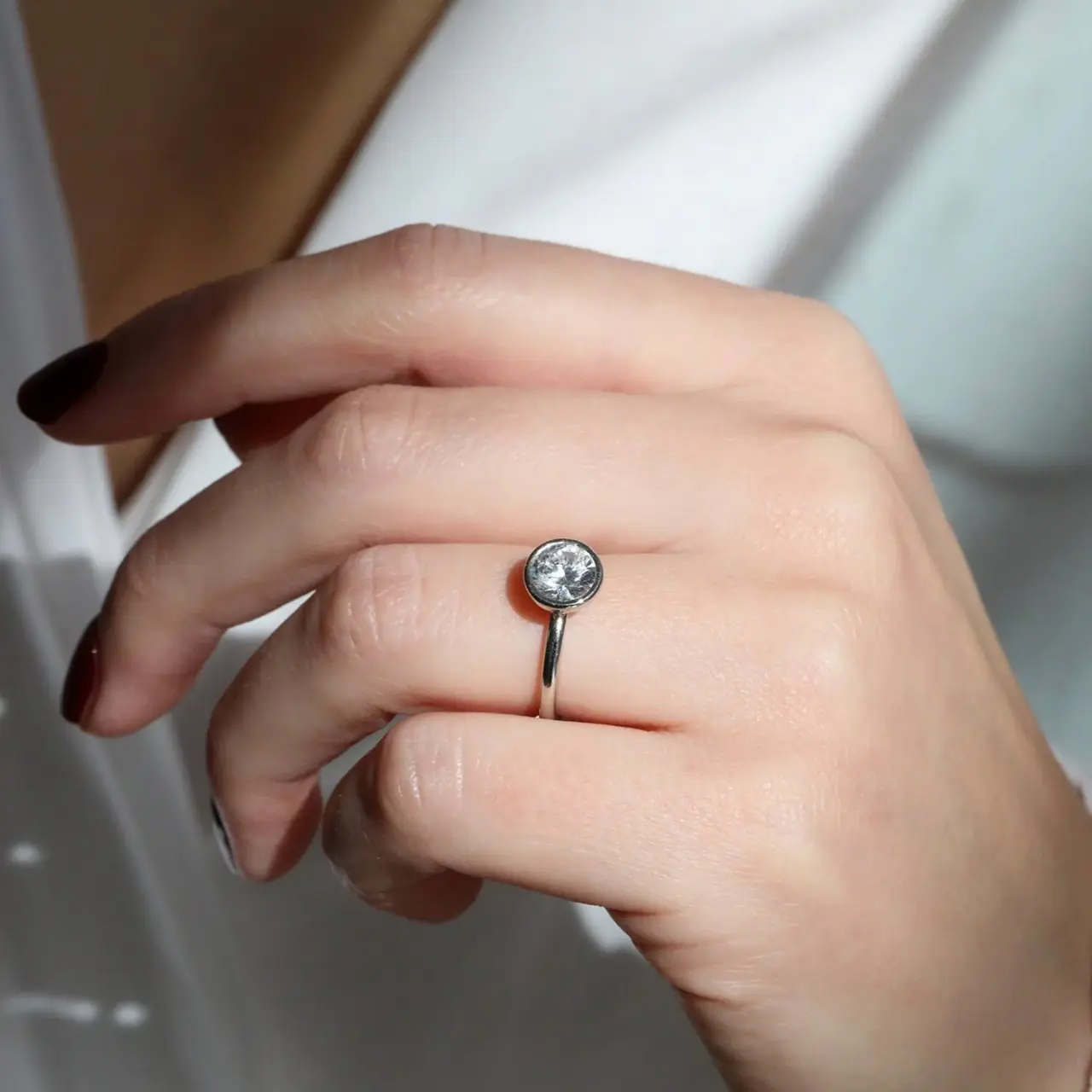
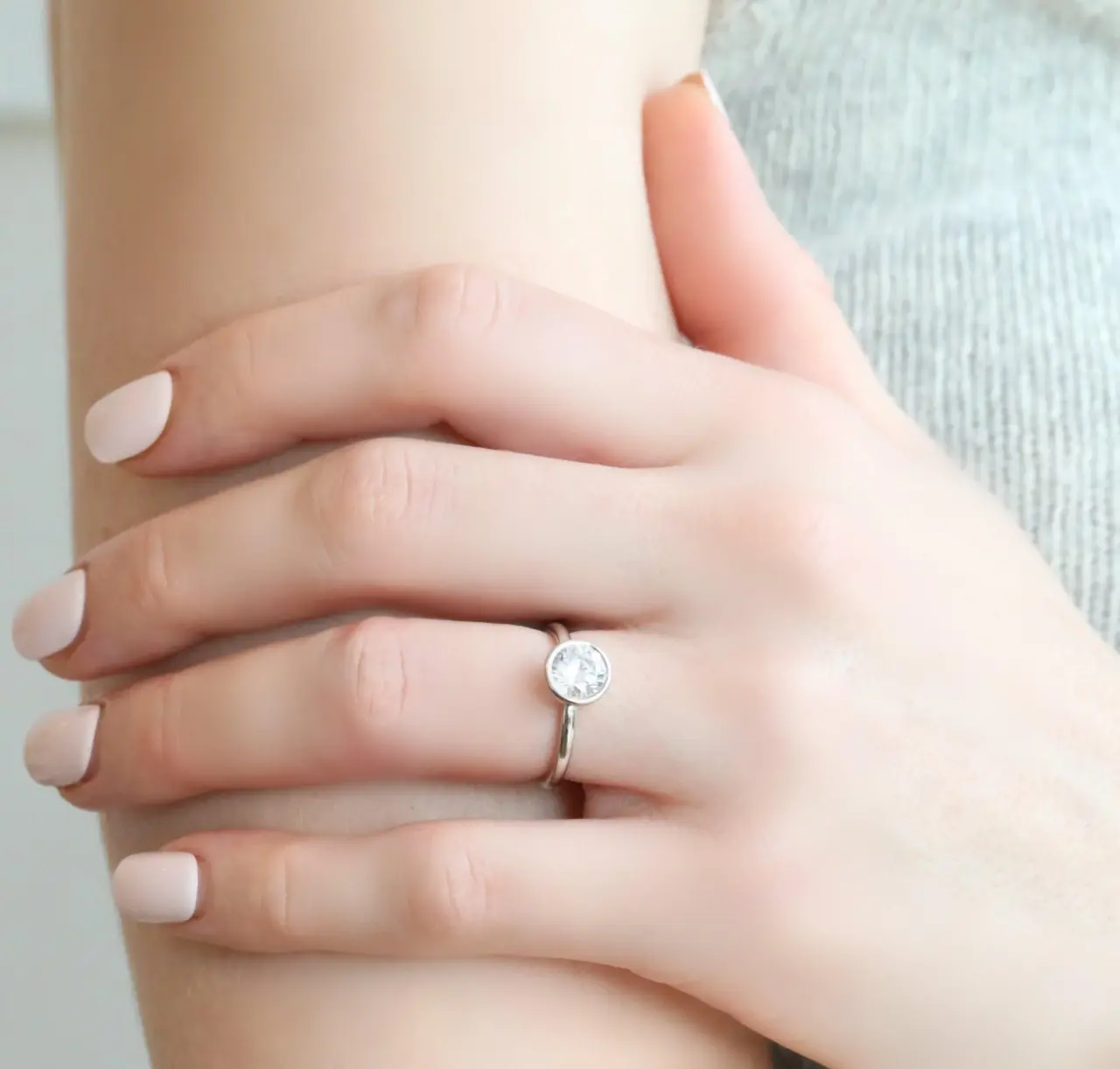
Therapists sit for long stretches — often five to seven fifty-minute sessions in a day, with short breaks between. A ring that’s uncomfortable to sit with — too heavy, too wide, or with a setting that digs into the adjacent finger — becomes a low-level distraction across an entire working day. Slim bands between 1.5mm and 2.5mm and settings under 5mm are consistently the most comfortable for session work. Weight matters too: some therapists prefer the lighter feel of 14k gold for all-day wear over denser platinum.
03
Meaningful details — the hidden dimension
Therapists are among the buyers most drawn to rings with personal significance beyond the aesthetic — a birthstone, a hidden engraving inside the band, a stone with a particular meaning, a design that references something specific to the relationship. A ring that looks simple from the outside and carries something personal on the inside is particularly resonant for someone in this field — it’s the ring equivalent of the work itself. Many jewellers offer inside-band engraving at little or no additional cost.
04
Stone and metal for calm daily wear
A therapist’s ring doesn’t face the physical demands of clinical healthcare or active fieldwork, but it is worn every single day through emotionally intensive work. Platinum and 14k gold are both excellent choices — platinum for its long-term resilience and tarnish resistance, gold for its lighter weight and warmth. Lab-grown diamonds are increasingly popular among therapists and values-conscious professionals — identical in every measurable way to mined diamonds, with a fully traceable ethical supply chain, at meaningfully lower cost.
Common questions
FAQ — what people
actually ask.
What engagement ring is best for a therapist?
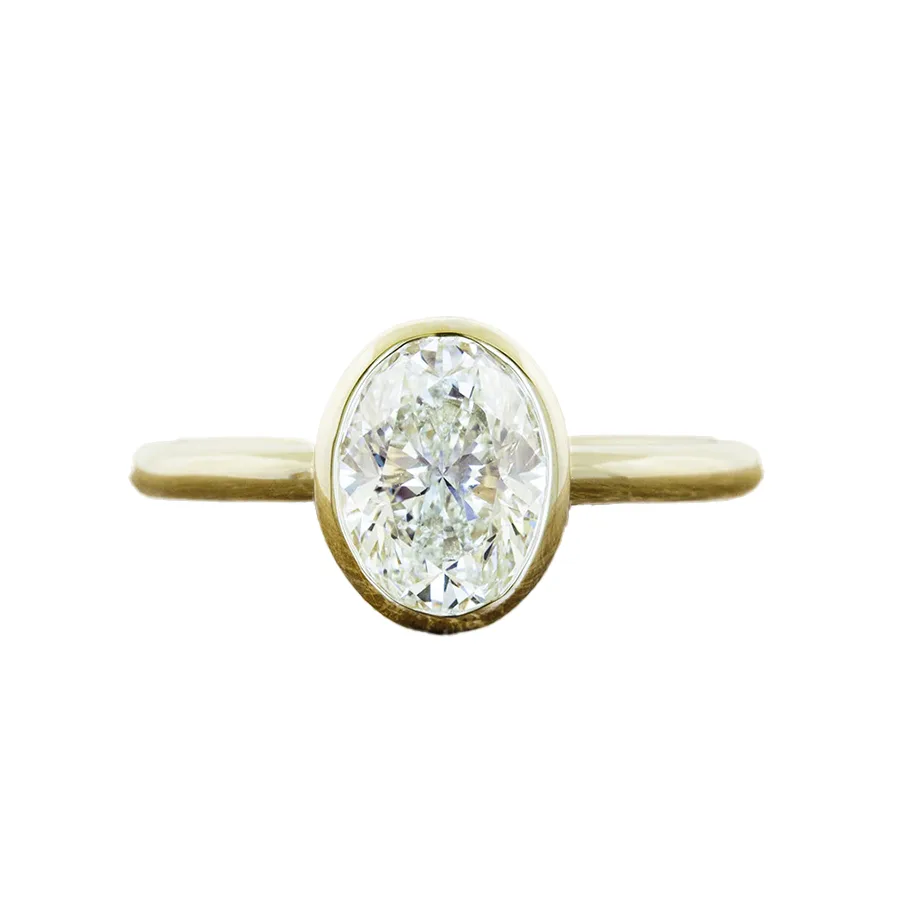
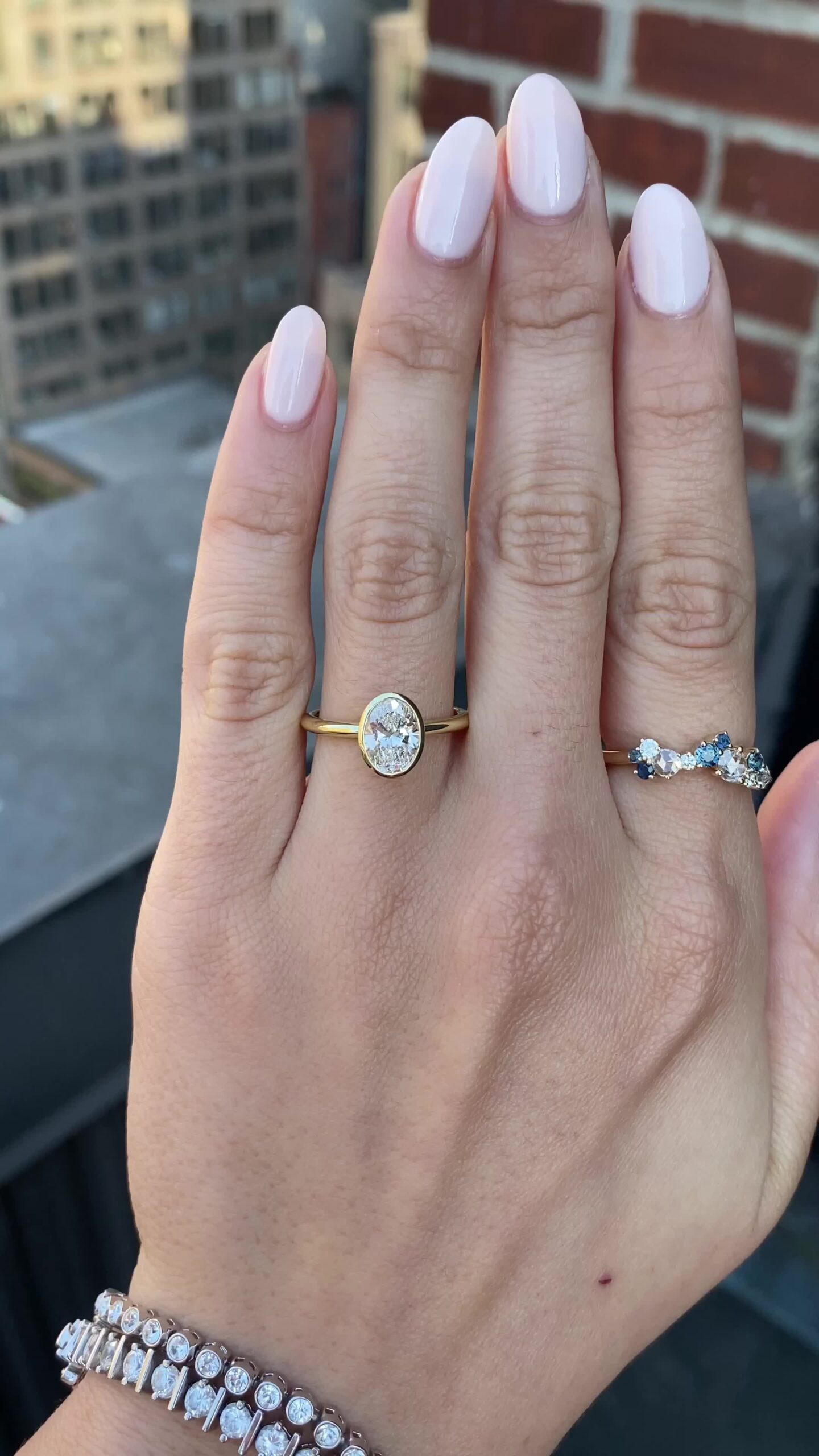
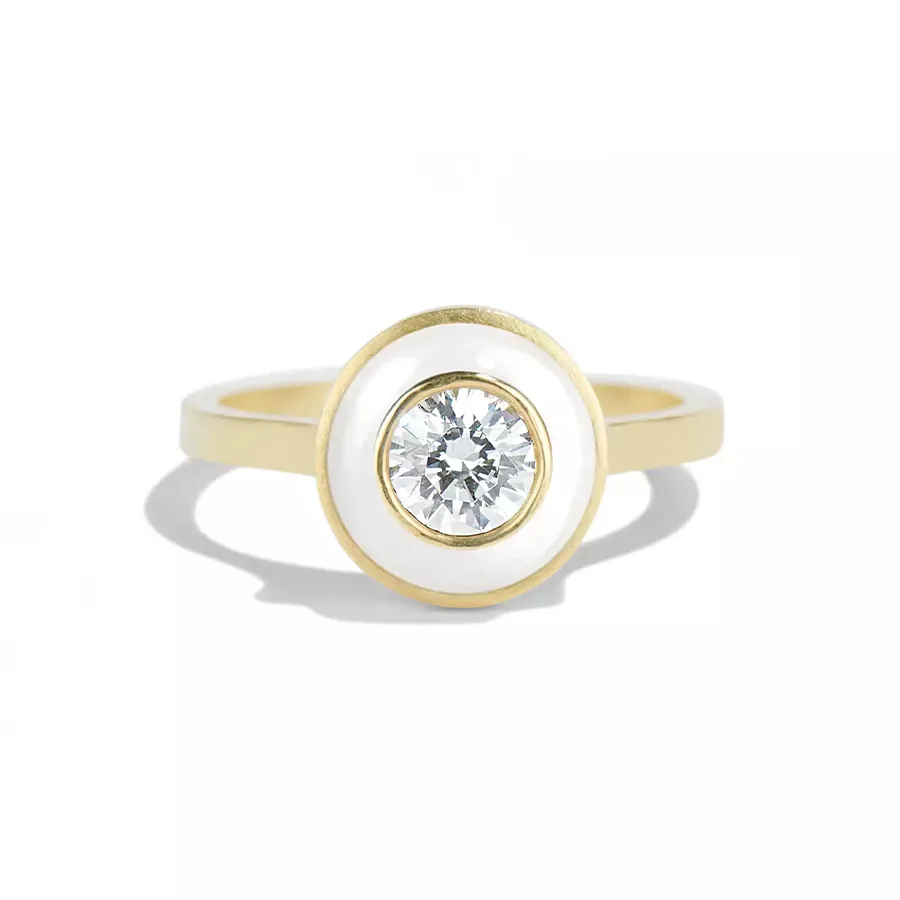
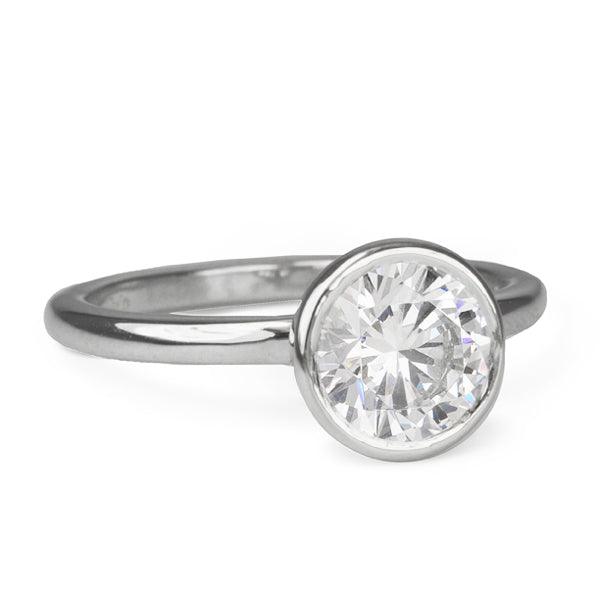
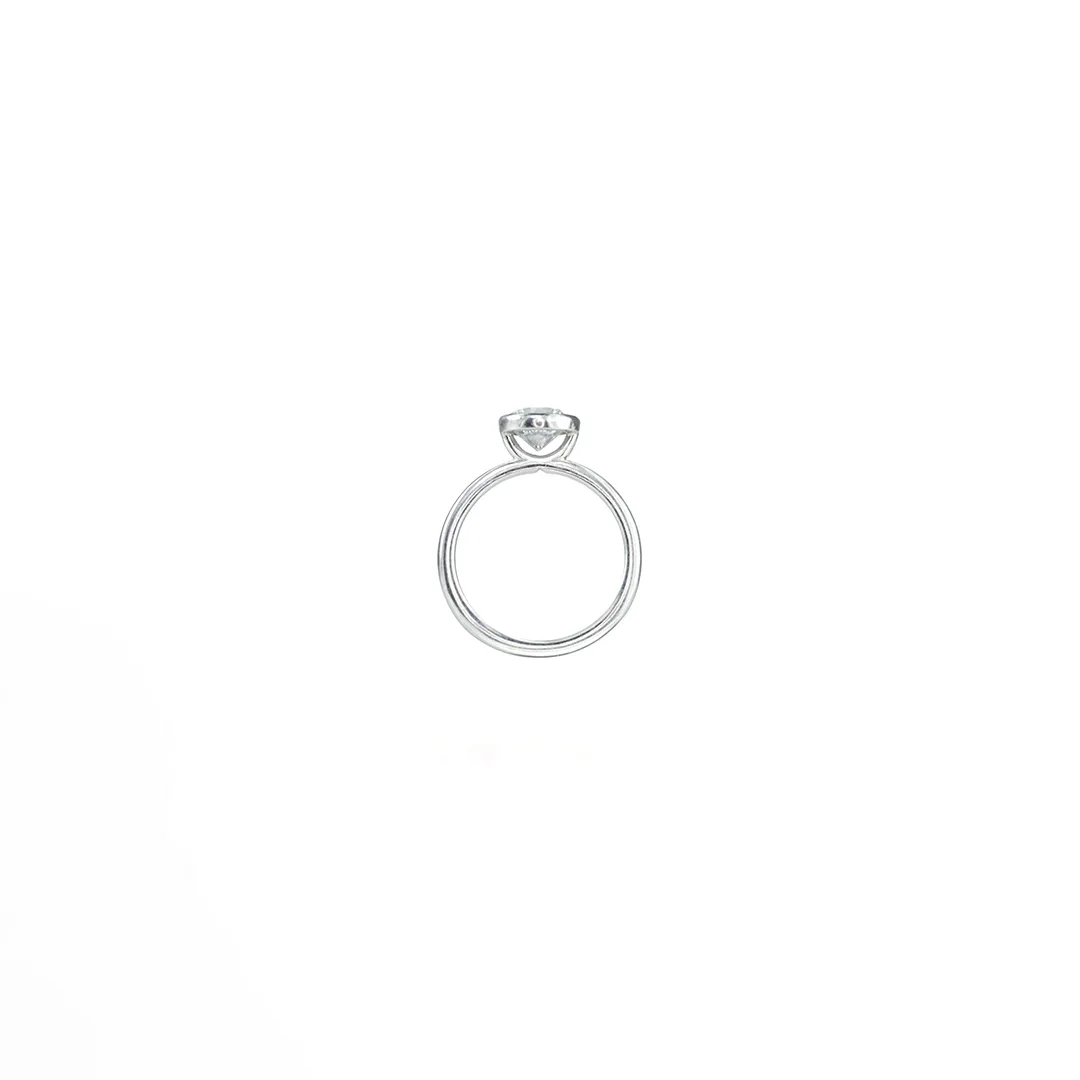
A delicate solitaire or a simple three-stone ring in a low-profile setting is the most consistently recommended choice. These styles are comfortable for long session days, appropriate across the full range of therapeutic environments, and carry a quiet elegance that complements rather than competes with the therapist’s presence. Band width between 1.5mm and 2mm and setting height under 5mm are the practical sweet spots. Stone quality matters more than size — a beautifully cut smaller diamond will look more intentional than a larger stone of average quality.
Can a ring reflect empathy and compassion?
It can — and for many therapists, this is where the most personal choices emerge. A birthstone rather than a diamond. A hidden engraving inside the band with a date or a word that means something. A vintage ring with history and patina. These choices don’t announce themselves to the room but they carry weight for the person wearing them — which is exactly how a therapist tends to think about meaning. Something doesn’t need to be visible to be significant.
Should a therapist choose a subtle or noticeable ring?
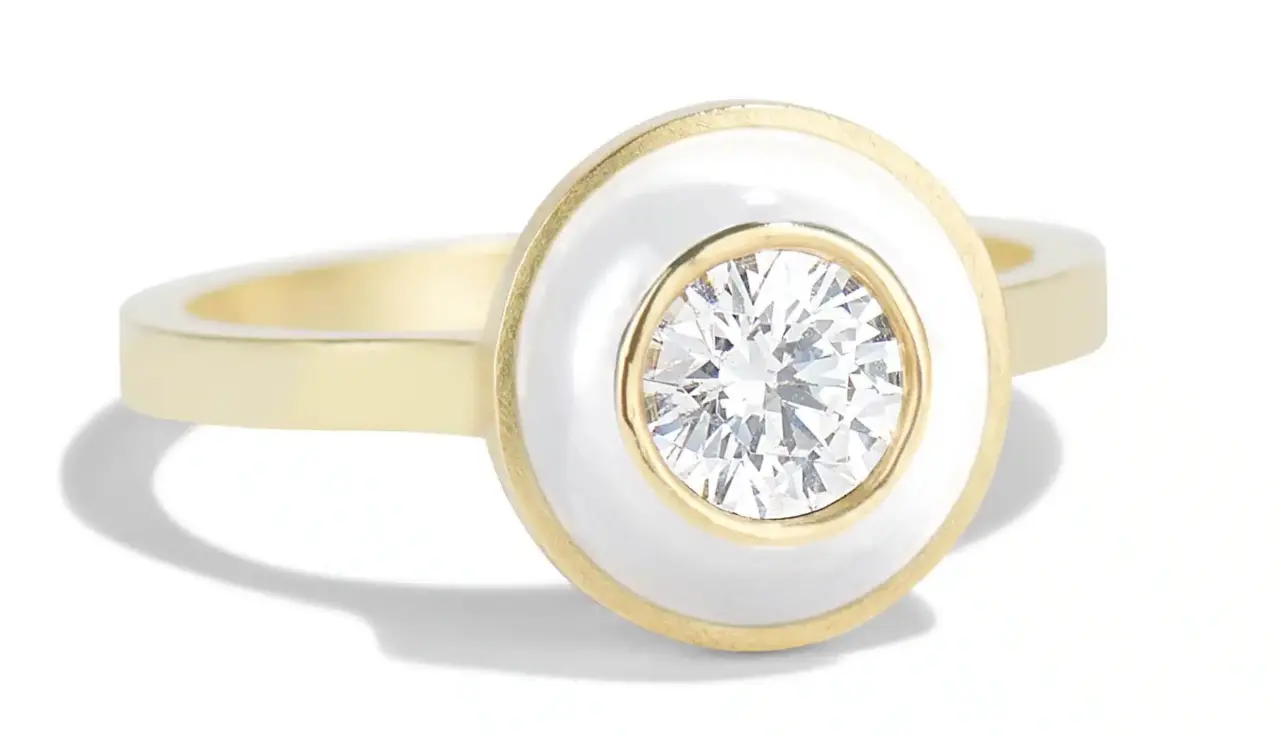
Subtle, but not invisible. There’s a meaningful difference between a ring that’s understated because it’s modest and one that’s understated because every detail has been thought through and nothing is accidental. The best rings for therapeutic environments sit in the second category — present enough to be beautiful, refined enough to never pull focus from the person across the room. A well-proportioned 0.7 to 1 carat round or oval solitaire in a slim setting does exactly that.
Can a ring feel as meaningful as the work she does?
Not quite — but the right ring can feel like it belongs to the same person who does that work. A therapist who has spent years helping others find meaning, connection, and clarity tends to bring that same thoughtfulness to her own choices. A ring chosen with genuine care — for its quality, its fit, its personal significance, its ability to last through everything — reflects exactly the values she brings to her sessions every day.