
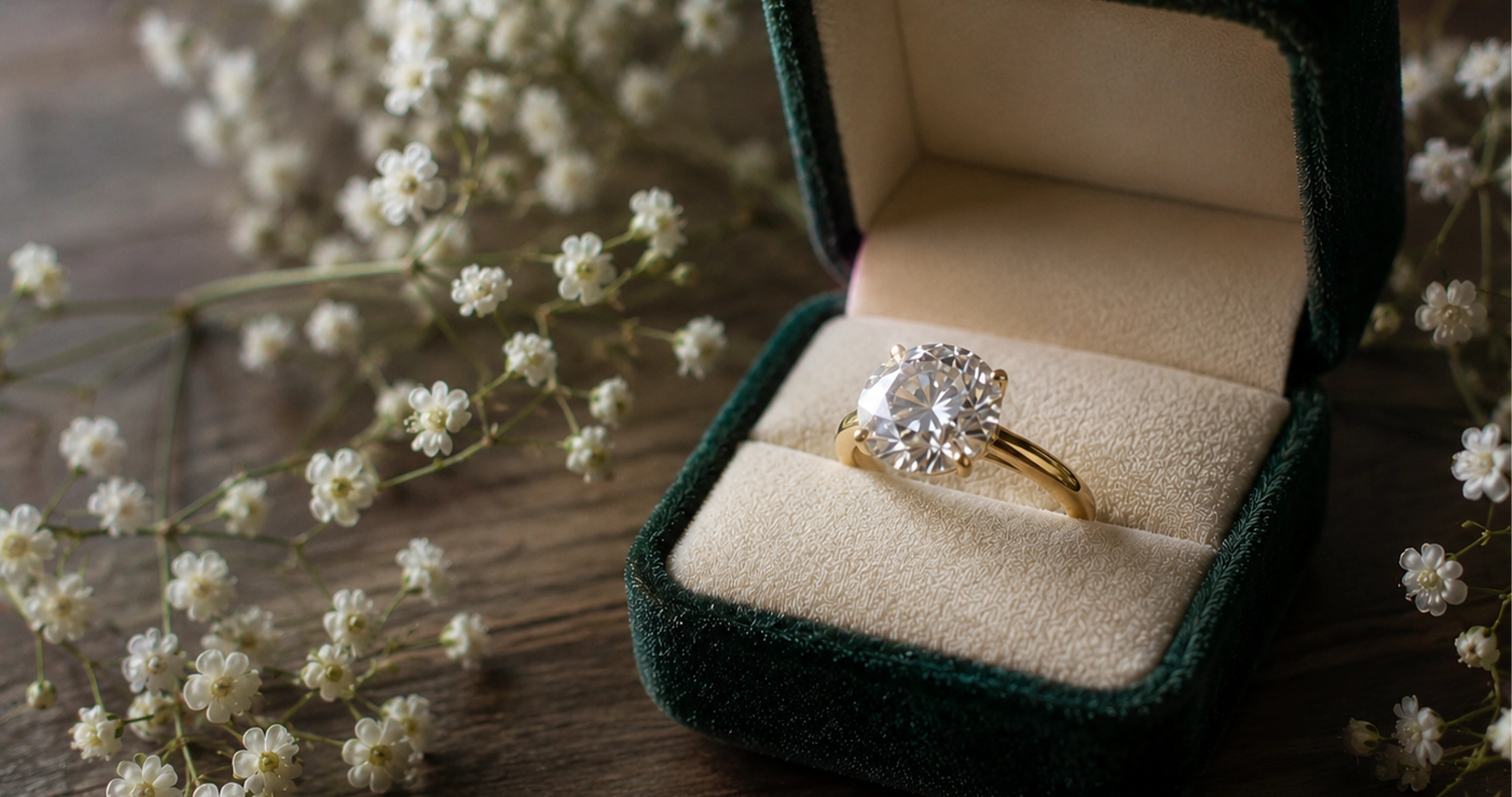
Why Americans and Europeans Can’t Agree on Engagement Rings
My husband is different. He spent almost half his life in Canada — surrounded by that North American idea that a proposal means a ring. A real one, with a stone, in a box. That idea gets into you whether you want it to or not. It’s in the movies, in the jewelry store windows, in the way people react when they see a proposal without a ring.
But he was never a traditional man. So he looked at the whole engagement ring tradition, thought about who I was, and did something completely different.
He drew earrings. By hand. On paper. His own design. Then he gave the drawing to his mother and asked her to make them.
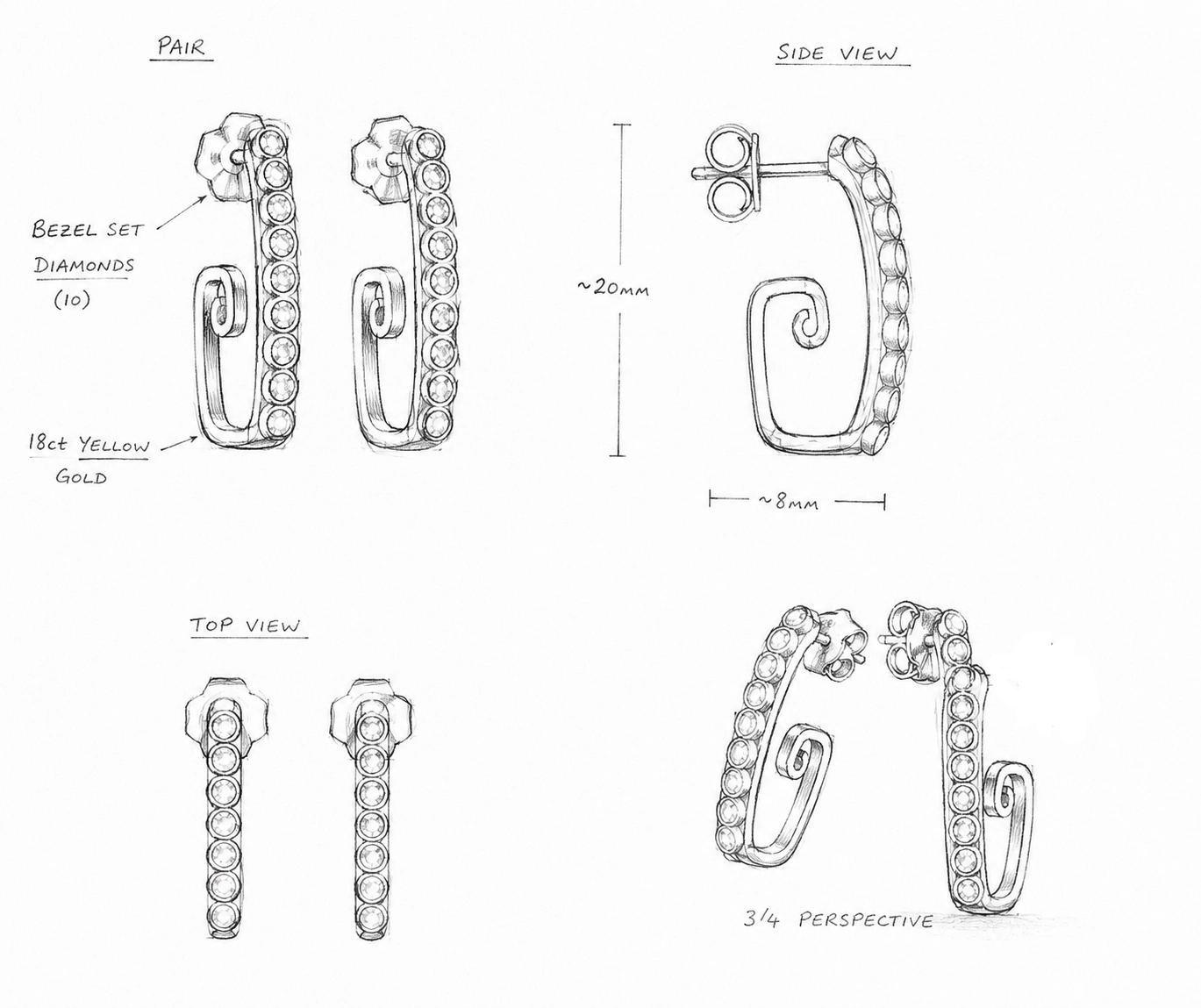
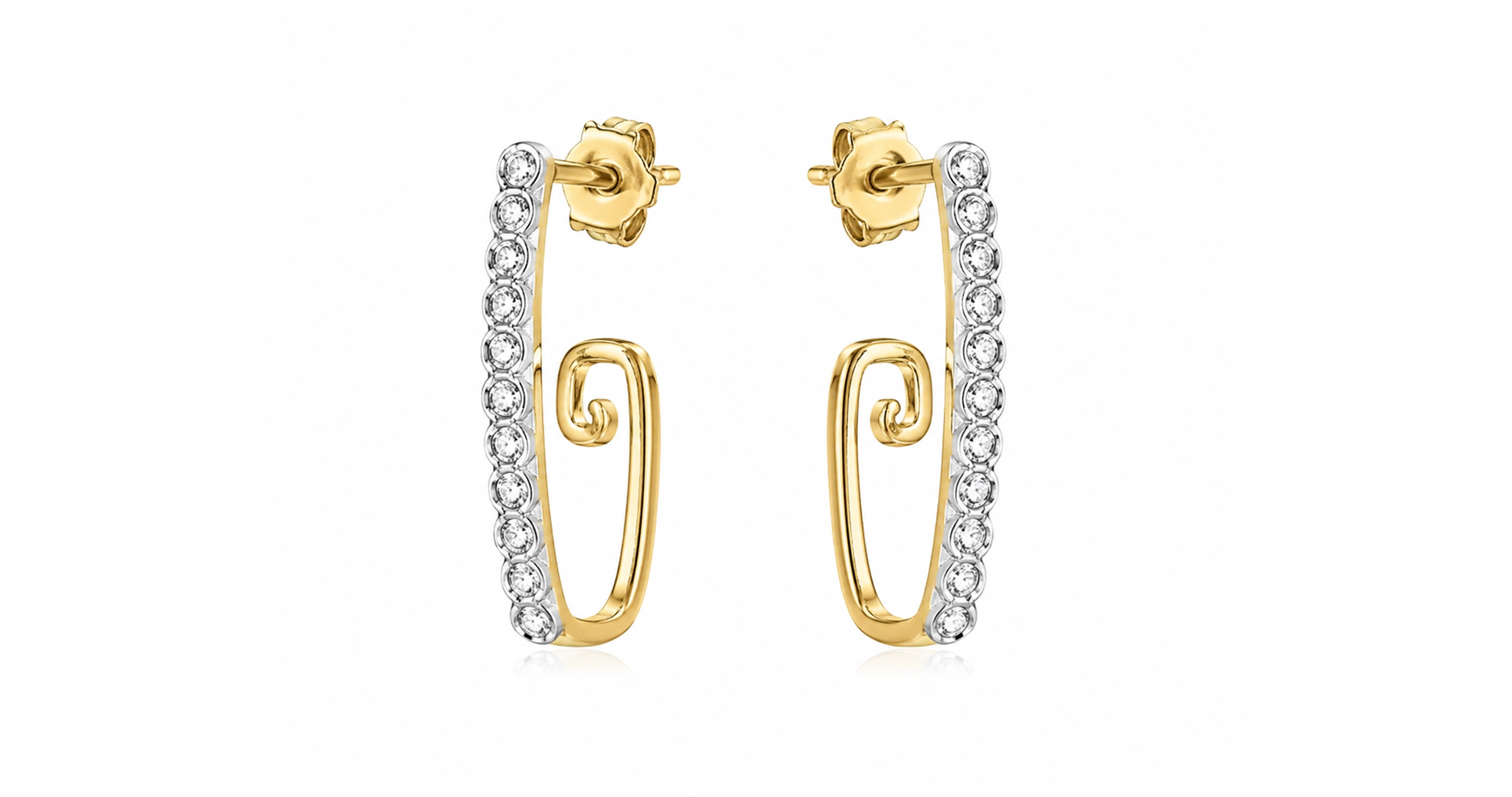
I didn’t know any of that when he gave them to me. They weren’t the most extravagant thing, but they touched something I didn’t expect to be touched. I keep thinking about it right now, and twenty years later I value that even more.
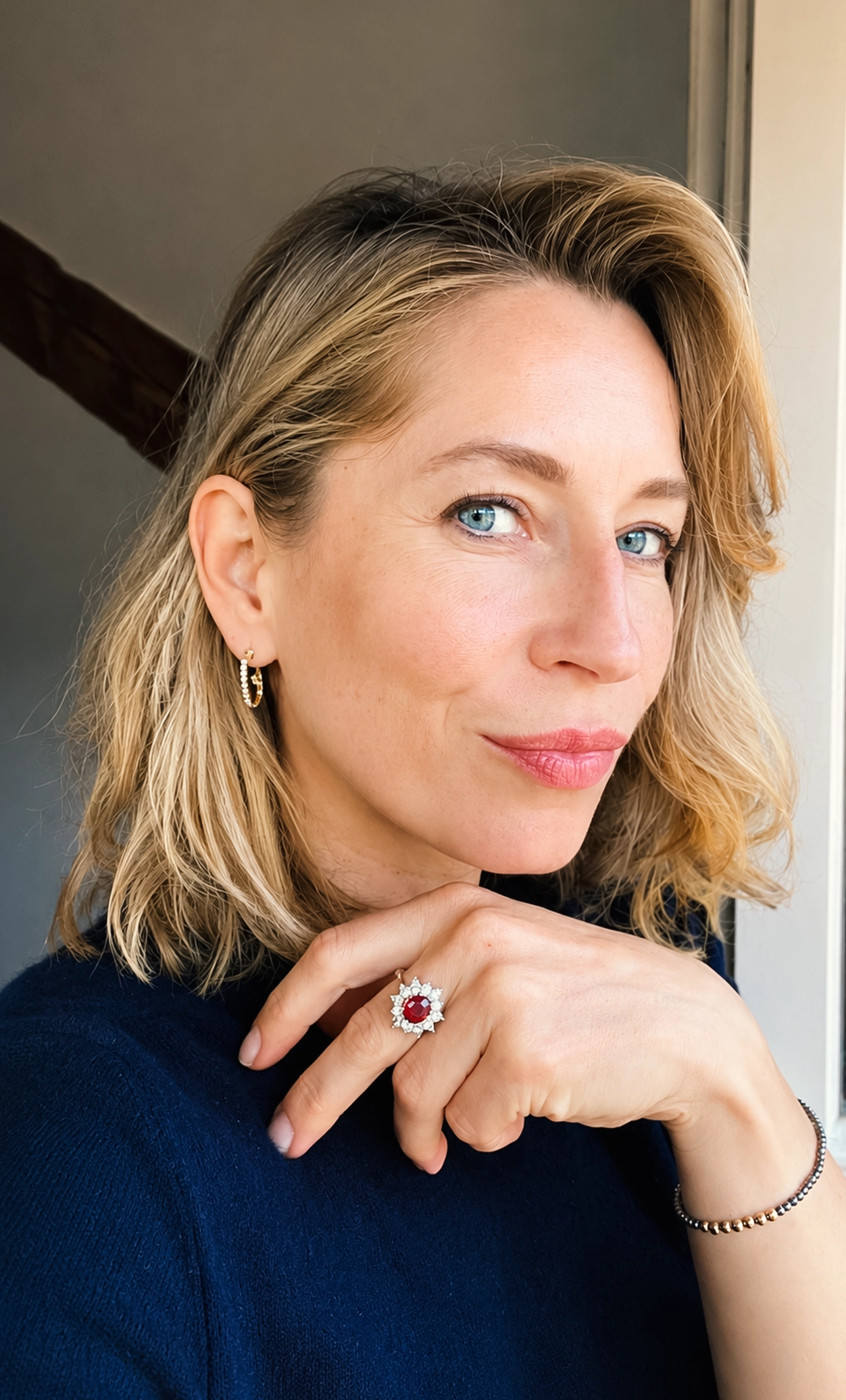
That was a long time ago. And somehow, that story is the reason willyoulove.me exists. Because the more rings I look at, the more I realize: where you grow up completely changes what you think love is supposed to look like on your finger.
The American Way
Dream big, finance if you have to
In America, the average engagement ring cost $7,200 in 2025. And that’s considered modest. There are entire financial products built around buying a ring — personal loans, jeweler financing, buy now pay later schemes. More than 70% of American buyers already carry some form of debt when they make the purchase. They do it anyway.
The “three months’ salary” rule — now widely mocked — was actually invented by De Beers in a 1930s marketing campaign. Americans largely abandoned the rule but kept the spirit of it. The ring should mean something financially. It should cost something real. It should announce itself.
Americans typically spend about twice what Europeans spend. Part of that is culture — the ring is both an emotional symbol and a status signal. And diamonds dominate: over 85% of American engagement rings feature diamonds, with the average stone sitting at 1.7 carats. That is not a subtle stone.
The French Way
Small, chic, and honestly quite perfect
Meanwhile in Paris, a woman is looking at a ring that costs a fraction of the American average and thinking it’s exactly right.
French women who choose diamonds go small — typically 0.3 to 0.4 carats. But many don’t choose diamonds at all. Colored gemstones are widely preferred — sapphires, rubies, emeralds. Stones chosen for their beauty and personality, not their size.
“It’s not really a competition for who has the biggest diamond,” one French stylist put it. “We appreciate more a ring designed by the husband, or one with a history — like a family ring.” Resetting a family heirloom is deeply popular in France. The ring belonged to someone. It has a story. That matters more than the carat weight.
The proposal itself is also different. In many French families, the couple chooses the ring together — it’s a joint decision, not a surprise. Less Hollywood, more honest. And honestly? I find that more romantic, not less.
The Italian Way
Heirlooms and thin gold bands
Italy sits somewhere between deep tradition and elegant simplicity. Heirloom rings are hugely popular — especially in older families, where the groom gives his bride a ring passed down for generations, that will eventually go to their children.
There’s also the veretta — a thin single band set all the way around with small stones. Called an eternity ring elsewhere. Delicate. Continuous. Nothing like the wide cathedral settings that fill American jewelry stores. Italian engagement rings feel like they were made to be worn every day, not admired in a box.
So why are they so different?
It’s not just money. France and Italy are not poor countries. This is about values. Europeans tend to value discretion — a very large diamond reads as showing off, while a small sapphire, or a grandmother’s ring, reads as having taste, and the confidence not to need anyone’s approval.
Americans were shaped by De Beers. By Hollywood. By the cultural idea that love should be visible, measurable, and impressive. The ring is proof — of commitment, of seriousness, of love that was willing to sacrifice something real to exist. Neither is wrong. They’re just different languages for the same feeling.
And then there are the people who invent their own language
My husband didn’t follow the American tradition. He didn’t follow the European one either. He drew something. Asked his mother to make it. Kept one for himself.
I think about that whenever I find a ring that feels completely unlike anything else — something that couldn’t have come from a trend, or a rule, or a marketing campaign. Something that only exists because one person sat down and thought: what do I really want for my love?
That’s the question willyoulove.me was built around. Not what the tradition says. Not what the algorithm recommends. Just: what is the right ring for this particular person, living this particular life?
If you’re somewhere between the French instinct for discretion and the American instinct for something that takes your breath away — you’re in the right place.
Browse all ringsSkai is the founder of willyoulove.me — a curation site where every engagement ring is handpicked and categorised by profession, style and stone. No algorithms. No brand deals. Just beautiful rings, chosen with intention.