
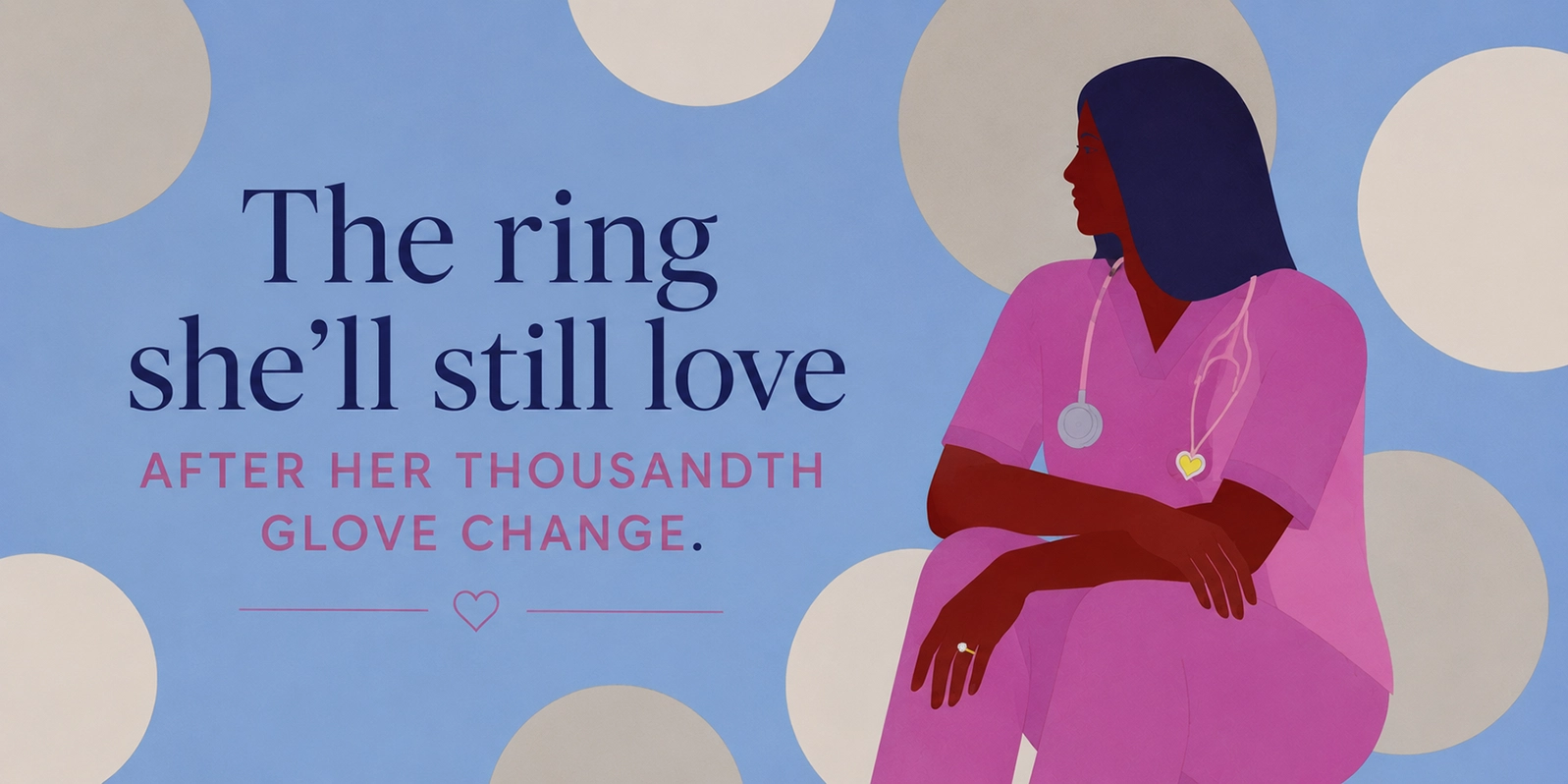
An Honest Guide to the Ring She’ll Never Want to Take Off
Somewhere right now, someone is about to spend thousands on an engagement ring without realizing the very first thing their partner might do after saying “yes” is pull on a pair of nitrile gloves.
This is a guide for that ring.
We need to talk about gloves. Not diamonds, not platinum, not whether oval is having a bigger moment than emerald cut. Gloves.
Proposal photos usually involve sunsets, not hand sanitizer. But life has always been more interesting than advertisements. If you’ve ever spent time around a nurse, you’ll know their hands tell stories most people never notice — they’ve held frightened children, adjusted oxygen masks, buttoned tiny baby-grows for parents too overwhelmed to remember which button went where. By lunchtime they’ve washed their hands more times than most people do in two days. And tomorrow, they’ll do it all again.
An engagement ring doesn’t get to sit on the sidelines through any of this. It comes along for every shift, every glove, every hurried coffee, every ordinary Tuesday. Which is exactly why choosing a ring for a nurse deserves a different conversation. Not a more complicated one — a more honest one.
The Setting Over The Stone
Jewelry shops are designed for Saturdays. Nursing happens on Tuesdays.
There’s something wonderfully unrealistic about jewelry shops. The lighting makes every diamond look like it has its own spotlight. Someone quietly offers you sparkling water. Time slows down. It’s lovely — and almost none of it resembles real life.
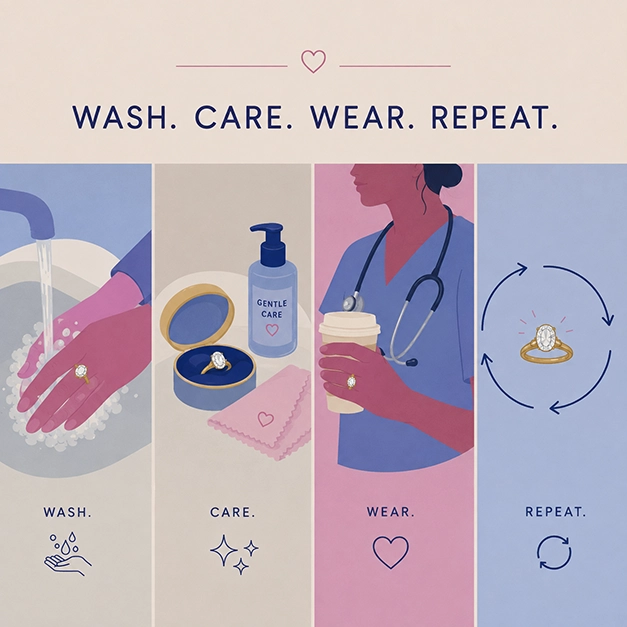
Real life is washing your hands before you’ve finished your coffee. Reaching into your pocket for a pen that’s disappeared again. The ring that looked spectacular under boutique lighting now has a new job description: it has to survive reality. That’s much harder. And, we think, much more romantic — because a ring isn’t designed for the proposal. It’s designed for everything that happens afterwards.
The first question shouldn’t be how many carats. It should be: what does she do with her hands every day?
Because the answer quietly changes everything. A concert pianist doesn’t wear a ring the way a sculptor does. An architect notices different details than a chef. And nurses ask more from an engagement ring than almost anyone — not because they’re demanding, but because they’re busy. There’s a difference.
We fell down a Reddit rabbit hole
This guide didn’t begin in a showroom. It began at midnight, with far too many browser tabs open, reading conversations between nurses. Hundreds of them. Not looking for quotes — looking for what people actually wished someone had told them before buying a ring.
Something fascinating happened. Almost nobody regretted a diamond that was “too small.” Nobody wrote I wish I’d spent another $5,000. Instead, the regrets were surprisingly ordinary: “I wish my gloves didn’t keep catching.” “I didn’t realize how high the setting was.” “I stopped wearing it to work because I was scared of damaging it.” Those aren’t jewelry problems. They’re life problems. Which is exactly why they matter.
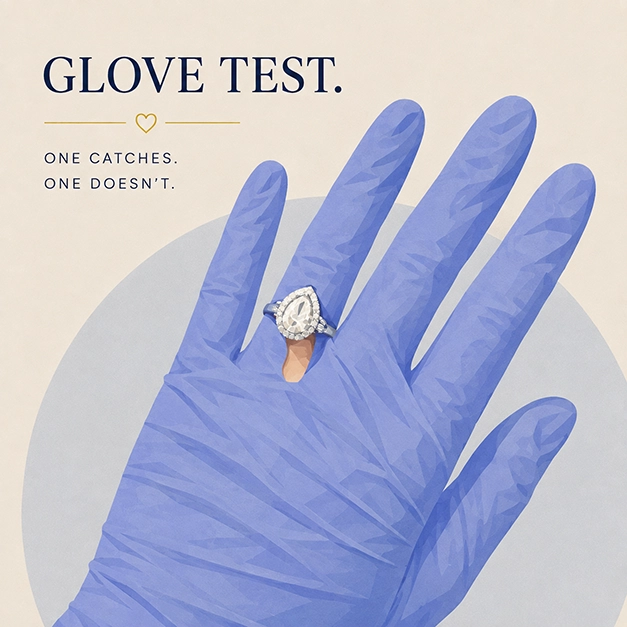
Grown adults were passionately debating nitrile gloves, and we loved it — because suddenly the conversation felt real. One nurse had become so good at removing gloves without catching her ring that she’d developed a technique. Another had started leaving her ring at home because wearing it to work made her anxious. Not exactly the sentence you’ll find engraved inside a Tiffany box. But probably more useful.
Think of the diamond as the painting. The setting is the frame. One catches your eye. The other decides whether you can comfortably live with it every day.
The most luxurious engagement ring isn’t necessarily the biggest, the rarest, or the most expensive. It’s the one that quietly becomes part of your life without asking anything in return. The one that slips under a glove without a second thought. The one that still catches the light beautifully when you’re grabbing coffee after a twelve-hour shift. The one you stop noticing — until someone else notices it. That’s real luxury. Not showing off. Just belonging.
“I stopped noticing my ring after a while. That’s how I knew I’d chosen the right one.”
— a nurse, somewhere on the internetWe couldn’t think of a better compliment. Not noticing isn’t indifference — it’s comfort. It’s trust. It’s the point where something beautiful has become completely, effortlessly yours. Perhaps that’s what every engagement ring should aspire to.
The jewelry box opens. Now let’s talk about rings as personalities
After looking at thousands of engagement rings over the years, we’ve become convinced of something: people don’t choose rings so much as rings choose people. Some simply feel right. Here’s what we’d look at for someone in healthcare — and why.
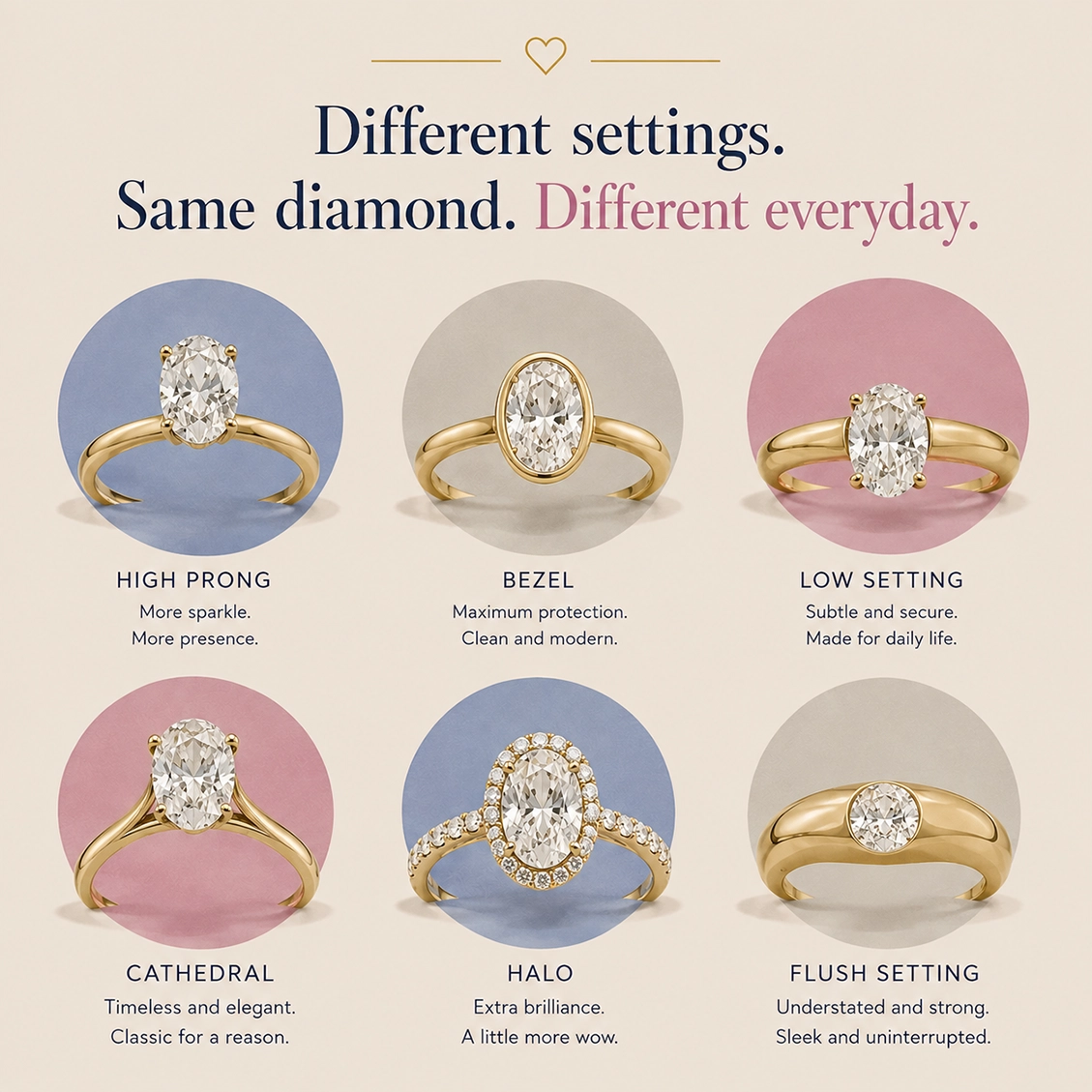
The ring that never asks for attention. Every collection has a quiet one. It isn’t covered in tiny diamonds or trying to be photographed from every angle. For nurses, that’s often a low-profile solitaire — not because it’s the safest choice, but because it’s the easiest to live with. Like a cashmere jumper you never think about all day. It doesn’t compete with your life. It joins it.
The bezel: the ring that grew up. Very few of us grow up dreaming of a bezel — we picture the classic solitaire from the films, on our mums, on Pinterest boards titled “Someday.” Then something happens after a few years in healthcare, and the bezel starts looking quietly irresistible. It doesn’t need delicate claws; it wraps around the diamond, protects it, frames it. Almost like saying don’t worry, I’ve got you. As one nurse put it: “It’s not the ring I imagined at twenty. It’s the ring I absolutely love wearing at thirty-five.”
The height nobody thinks about. Two rings can look identical in photographs — one sits close to the finger, the other several millimeters higher. On a velvet tray, you barely notice. During your fiftieth glove change, you definitely do. Ring height rarely appears in advertisements, perhaps because it’s hard to photograph. Yet it might be the most important design decision you make. A tiny difference, a completely different relationship.
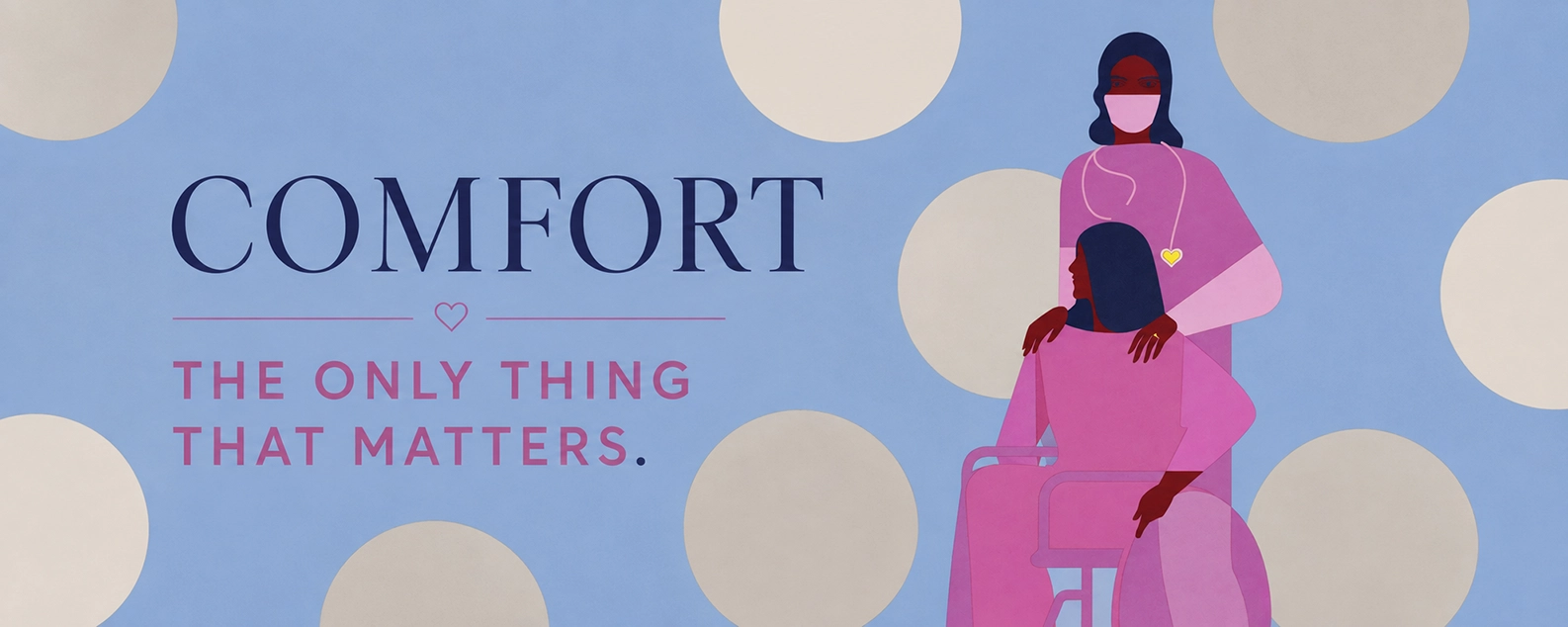
We expected nurses to insist on carats and platinum. Instead, one word appeared over and over: comfort. Which made us wonder whether comfort might be one of the most romantic things jewelry can offer.
A quick word on diamond shapes
Round brilliants are the white shirt of diamonds. Classic not because they’re boring, but because they quietly work with almost everything — modern, vintage, minimal, statement. If you want to love your ring as much in twenty years as you do today, a round brilliant is hard to beat.
Ovals are the quiet extrovert — elegant without being formal, large without being flashy. Many can be set to sit beautifully low on the hand, especially with the right setting. Emerald cuts are for the woman who doesn’t need applause: architectural, calm, almost intellectual. If round diamonds are champagne, emerald cuts are a perfectly made martini — simple, precise, impossible to fake.
Pears, marquise and princess cuts are often breathtaking, but their sharp points ask a little more from their settings. That’s not a criticism — it’s just part of the design. Wonderful, like suede shoes. Just perhaps not the first choice for hiking.
Gold or platinum? We have a confession
We don’t think there’s a universally correct answer. The internet loves declaring winners; reality is more interesting. Platinum is wonderfully reassuring — dense, strong, naturally white, and it develops a soft patina many people adore because it tells the story of a life well lived. Gold tells a different story: yellow gold feels warm, romantic, timeless, with 14k being wonderfully practical and 18k a little richer and softer. Neither is better. The right choice depends on the life — and the taste — of the person wearing it.
We almost never say “this is the best ring,” because we don’t believe there is one. We ask a better question: who is this ring perfect for? That’s how we’ve always curated — by personality and lifestyle, not by trend.
If she values…
| If she values… | We’d look at… | Why |
|---|---|---|
| Comfort above all | A low-profile bezel | Smooth, secure and glove-friendly |
| Timeless elegance | A low-set solitaire | A classic that works beautifully every day |
| Modern minimalism | A bezel-set emerald cut | Clean lines with excellent protection |
| Maximum sparkle | A round brilliant | Brilliant light return without chasing trends |
| Quiet luxury | An oval solitaire | Soft, elegant and effortlessly wearable |
Things people secretly Google at 2 a.m.
Probably not because of the diamond — more likely the setting. People blame the stone when it’s usually the height of the ring or the shape of the prongs doing the damage. If your gloves catch every day, it’s not something you’re doing wrong. The ring simply may not have been designed with your everyday life in mind.
Only you can answer that. Some nurses wear theirs every day; others take it off for the OR, intensive care, or procedures where policy — or simple peace of mind — makes that the better choice. There’s no right answer, only the one that lets you focus on your patients instead of your jewelry. (A ring-keeper necklace, worn during bare-hand procedures and slipped back on after, is a quietly brilliant solution several nurses swear by.)
If you made us choose, we’d choose the setting every single time. A beautiful setting quietly improves every day you wear the ring. A bigger diamond mainly changes the way it looks. One changes photographs. The other changes your life.
We genuinely like both. Natural diamonds carry billions of years of geological history; lab-grown carry remarkable scientific innovation. They’re chemically and optically identical. The right choice isn’t about quality — it’s about your budget, your priorities, and the story you want your ring to tell.
This might be our favorite question, because it assumes practical can’t also be beautiful. We don’t believe that’s true. Some of the most elegant rings we’ve ever seen happen to be wonderfully practical. Perhaps practicality is one of the most underrated forms of beauty.
Our curator’s picks
A low-profile solitaire. Simple, timeless, beautiful from every angle — the sort of ring you’ll still love twenty years from now.
A bezel-set oval. Protective without looking bulky, modern without feeling trendy. One of those designs that quietly becomes more beautiful every year.
A round brilliant in a low basket setting. Famous for a reason — classic rarely goes out of fashion.
An emerald-cut bezel. Perhaps not the first ring people imagine — very often the one they end up falling in love with.
Every one of these lives in our engagement rings for nurses collection — each ring personally chosen, and picked for exactly the kind of everyday life we’ve been talking about.
Before you buy
Can we suggest something? Forget Pinterest for an afternoon. Forget Instagram, forget trends. Instead, picture her on a completely ordinary day — hair tied back, coffee in one hand, keys in the other, walking into work and pulling on her first pair of gloves. Now ask yourself one question: does this ring belong in that moment? Because if it does, it will probably belong in every beautiful moment that follows too.
We sometimes think the industry talks too much about diamonds and not enough about people. Diamonds are remarkable, but they don’t build marriages. People do. The ring is simply lucky enough to witness them — ordinary breakfasts, difficult Tuesdays, late-night supermarket trips, tiny fingers wrapped around yours for the first time. It will gather scratches, little marks, a story. Just like the two people wearing it.
Years from now, when someone compliments your ring, we hope you don’t immediately think about the diamond. We hope you think about the life you’ve lived while wearing it. That’s the real sparkle.
Tell me about her — her work, her days, her taste. I’ll personally curate 5 rings chosen just for her, free, within 24 hours.
Get a personal curationSkai is the founder of willyoulove.me — a curation site where every engagement ring is handpicked and categorised by profession, style and stone. No algorithms. No brand deals. Just beautiful rings, chosen with intention.